Global Warming
Global warming is the increase in the average measured temperature of the Earth's near-surface air and oceans since the mid-20th century, and its projected continuation.
The average global air temperature near the Earth's surface increased 0.74 ± 0.18 °C (1.33 ± 0.32 °F) during the 100 years ending in 2005.
The average global air temperature near the Earth's surface increased 0.74 ± 0.18 °C (1.33 ± 0.32 °F) during the 100 years ending in 2005.
The Intergovernmental Panel on Climate Change (IPCC) concludes "most of the observed increase in globally averaged temperatures since the mid-twentieth century is very likely due to the observed increase in anthropogenic (man-made) greenhouse gas concentrations via an enhanced greenhouse effect. Natural phenomena such as solar variation combined with volcanoes probably had a small warming effect from pre-industrial times to 1950 and a small cooling effect from 1950 onward.
 (image from : www.effectofglobalwarming.com/global-warming.html)
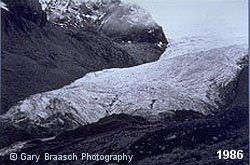
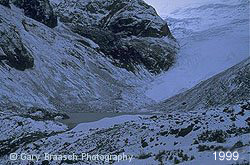
Increasing global temperature is expected to cause sea level to rise, an increase in the intensity of extreme weather events, and significant changes to the amount and pattern of precipitation, likely leading to an expanse of tropical areas and increased pace of desertification. Other expected effects of global warming include changes in agricultural yields, modifications of trade routes, glacier retreat, species extinctions and increases in the ranges of disease vectors.
posted by 1000leaf at
8:04 PM


0 Comments:
Post a Comment
Subscribe to Post Comments [Atom]
<< Home