You can place add here


Cordillera Blanca, Peru Cordillera Blanca, Peru
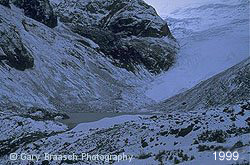
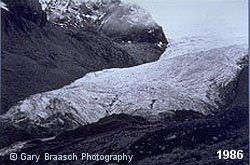
Glacier Ururashraju, at about 15,000 feet in Cordillera Blanca of Peru. Photographed in 1986 by Peruvian glaciologist Alcides Ames, whose studies and direction allowed Gary Braasch to rephotograph it in 1999. Retreat of about 500 M. Ames studies confirms the very rapid deglaciation of the Cordillera Blanca, which is the most ice-covered mountain range in the tropics.

Friday, October 31, 2008

Knowing why u can destroy this planet

Whatch this movie
You will know what is wrong about this live


What is your do in everyday ?
Why you still do that?
Why can't you do that?
Do you have any choice?
Do you robot or human?
Save earth by your live

Energy not make a war

Energy not make war people with other . War happen because some people not share them for good but for profit for theirself. What about you?
Movie : Energy War By Charles Caldwell

http://globalsolutions.org/multimedia/flash07/caldwell

Why Make Compost?

Environmental Benefits
Man Holding Handful of Compost - Photo Courtsey of Jepson Prairie Organics
Compost use can result in a variety of environmental benefits. The following are a few of the most important benefits:
Compost enriches soils
Compost has the ability to help regenerate poor soils. The composting process encourages the production of beneficial micro-organisms (mainly bacteria and fungi) which in turn break down organic matter to create humus. Humus--a rich nutrient-filled material--increases the nutrient content in soils and helps soils retain moisture. Compost has also been shown to suppress plant diseases and pests, reduce or eliminate the need for chemical fertilizers, and promote higher yields of agricultural crops.
Compost helps cleanup (remediate) contaminated soil
The composting process has been shown to absorb odors and treat semivolatile and volatile organic compounds (VOCs), including heating fuels, polyaromatic hydrocarbons (PAHs), and explosives. It has also been shown to bind heavy metals and prevent them from migrating to water resources or being absorbed by plants. The compost process degrades and, in some cases, completely eliminates wood preservatives, pesticides, and both chlorinated and nonchlorinated hydrocarbons in contaminated soils.

Compost Used as Erosion Deterent
Compost helps prevent pollution
Composting organic materials that have been diverted from landfills ultimately avoids the production of methane and leachate formulation in the landfills. Compost has the ability to prevent pollutants in stormwater runoff from reaching surface water resources. Compost has also been shown to prevent erosion and silting on embankments parallel to creeks, lakes, and rivers, and prevents erosion and turf loss on roadsides, hillsides, playing fields, and golf courses.
Using compost offers economic benefits
Using compost can reduce the need for water, fertilizers, and pesticides. It serves as a marketable commodity and is a low-cost alternative to standard landfill cover and artificial soil amendments. Composting also extends municipal landfill life by diverting organic materials from landfills and provides a less costly alternative to conventional methods of remediating (cleaning) contaminated soil.

Yard trimmings and food residuals together constitute 24 percent of the U.S. municipal solid waste stream. That's a lot of waste to send to landfills when it could become useful and environmentally beneficial compost instead!
Composting offers the obvious benefits of resource efficiency and creating a useful product from organic waste that would otherwise have been landfilled. On this web site, you will learn about the following:
Basic Information - provides a general description of what compost is and which materials should and should not be composted.
Where You Live - contains information about regional and state composting programs.
Organic Materials - provides more detailed information about the specific materials good for composting.
Frequent Questions - presents frequent questions about how and why you should compost.
Laws/Statutes - discusses regulations for organics materials and composting facilities.
Environmental Benefits - explains how composting benefits the environment.
Science/Technology - discusses how the composting process works and the different methods of composting, such as creating your own composting pile
Publications - contains a list of composting and related publications

http://www.epa.gov/osw/conserve/rrr/composting/benefits.htm
Hydropower -- Energy from Moving Water (Other Renewable Energy)

Of the renewable energy sources that generate electricity, hydropower is the most often used. It accounted for 6 percent of total U.S. electricity generation and 71 percent of generation from renewables in 2007.
It is one of the oldest sources of energy and was used thousands of years ago to turn a paddle wheel for purposes such as grinding grain. Our nation’s first industrial use of hydropower to generate electricity occurred in 1880, when 16 brush-arc lamps were powered using a water turbine at the Wolverine Chair Factory in Grand Rapids, Michigan. The first U.S. hydroelectric power plant opened on the Fox River near Appleton, Wisconsin, on September 30, 1882. Until that time, coal was the only fuel used to produce electricity. Because the source of hydropower is water, hydroelectric power plants must be located on a water source. Therefore, it wasn’t until the technology to transmit electricity over long distances was developed that hydropower became widely used.


Understanding the water cycle is important to understanding hydropower. In the water cycle -
Solar energy heats water on the surface, causing it to evaporate.
This water vapor condenses into clouds and falls back onto the surface as precipitation.
The water flows through rivers back into the oceans, where it can evaporate and begin the cycle over again.
Mechanical energy is derived by directing, harnessing, or channeling moving water. The amount of available energy in moving water is determined by its flow or fall.Swiftly flowing water in a big river, like the Columbia River The water flows from behind the dam through penstocks, turns the turbines, and causes the generators to generate electricity. The electricity is carried to users by a transmission line. Other water flows from behind the dam over spillways and into the river below." Along the border between Oregon and Washington, carries a great deal of energy in its flow. So, too,with water descending rapidly from a very high point, like Niagara Falls in New York. In either instance, the water flows through a pipe, or penstock,then pushes against and turns blades in a turbine to spin a generator to produce electricity.


In a run-of-the-river system, the force of the current applies the needed pressure, while in a storage system, water is accumulated in reservoirs created by dams, then released when the demand for electricity is high. Meanwhile, the reservoirs or lakes are used for boating and fishing, and often the rivers beyond the dams provide opportunities for whitewater rafting and kayaking. Hoover Dam, a hydroelectric facility completed in 1936 on the Colorado River between Arizona and Nevada, created Lake Mead, a 110-mile-long national recreational area that offers water sports and fishing in a desert setting . http://www.eia.doe.gov/kids/energyfacts/sources/renewable/water.html

Renewable Energy

Renewable EnergyRenewable energy on the other hand quickly replaces itself and is usually available in a never-ending supply. Renewable energy comes from the natural flow of sunlight, wind, or water around the Earth. With the help of special collectors, we can capture some of this energy and put it to use in our homes and businesses. As long as sunlight, water and wind continue to flow and trees and other plants continue to grow, we have access to a ready of supply of energy.


Kinds of Renewable Energy :


Solar energy

Photo courtesy of DOE/NREL

Solar energy is being used to generate useful amounts of heat and electricity around the world. Photo courtesy of DOE/NREL Solar energyFor billions of years, the sun has poured out huge amounts of energy in several forms, including light, heat, radio waves, and even x-rays. The Earth, in orbit around the sun, intercepts a very small part of the sun's immense output. On Earth, direct sunlight is available from sunrise until sunset, except during solar eclipses. Solar collectors and modules are designed to capture some of the sun's energy and change it from radiation into more usable forms such as heat or electricity. In fact, sunlight is an excellent source of heat and electricity, the two most important forms of energy we consume. Solar energy is becoming increasingly popular for remote power needs such as telecommunication towers, agricultural applications (irrigation and pasture management), in tropical countries that are not connected to an electrical grid, for heating swimming pools, and many other applications around the world.


Wind energy

Wind energy is really just another form of solar energy. Sunlight falling on oceans and continents causes air to warm and rise, which in turn generates surface winds. The wind has been used by humans for thousands of years, first to carry ships across oceans and, later, to pump water and grind grain. More recently, wind has been harnessed as a clean, safe source of electricity.

Wind energy is proving to be an economical way to make electricity. Photo courtesy ofJim Hamm Productions


Biomass energy

The term "biomass" refers to any form of plant or animal tissue. In the energy industry, biomass refers to wood, straw, biological waste products such as manure, and other natural materials that contain stored energy. The energy stored in biomass can be released by burning the material directly, or by feeding it to micro-organisms that use it to make biogas, a form of natural gas. Energy from biomass is still used around the world, for everything from cooking and heating to generating electricity. This hybrid biodigester in Cambodia, uses pig dung as an energy source. Photo courtesy of Royal Universityof Agriculture of Cambodia


Tuesday, October 28, 2008

Paper Recycling

Paper recycling is the process of recovering waste paper and remaking it into new paper products. There are three categories of paper that can be used as feedstocks for making recycled paper: mill broke, pre-consumer waste, and post-consumer waste.[1] Mill broke is paper trimmings and other paper scrap from the manufacture of paper, and is recycled internally in a paper mill. Pre-consumer waste is material that was discarded before it was ready for consumer use. Post-consumer waste is material discarded after consumer use, including OM (old magazines), OTD (old telephone directories), and RMP (residential mixed paper).[2] Paper suitable for recycling is called "scrap paper".

(Paper Tree Machine By John Cooney)


Friday, October 3, 2008

Why Stop Global Warming ?

Anybody need this planet like me
need planet to work out
work out to reach the aim
the aim like to make happy world
to many people who i knew or somebody in other region
they need this planet although not like me